.webp)

Big topics, made simple by people you trust. No shame, no lectures.
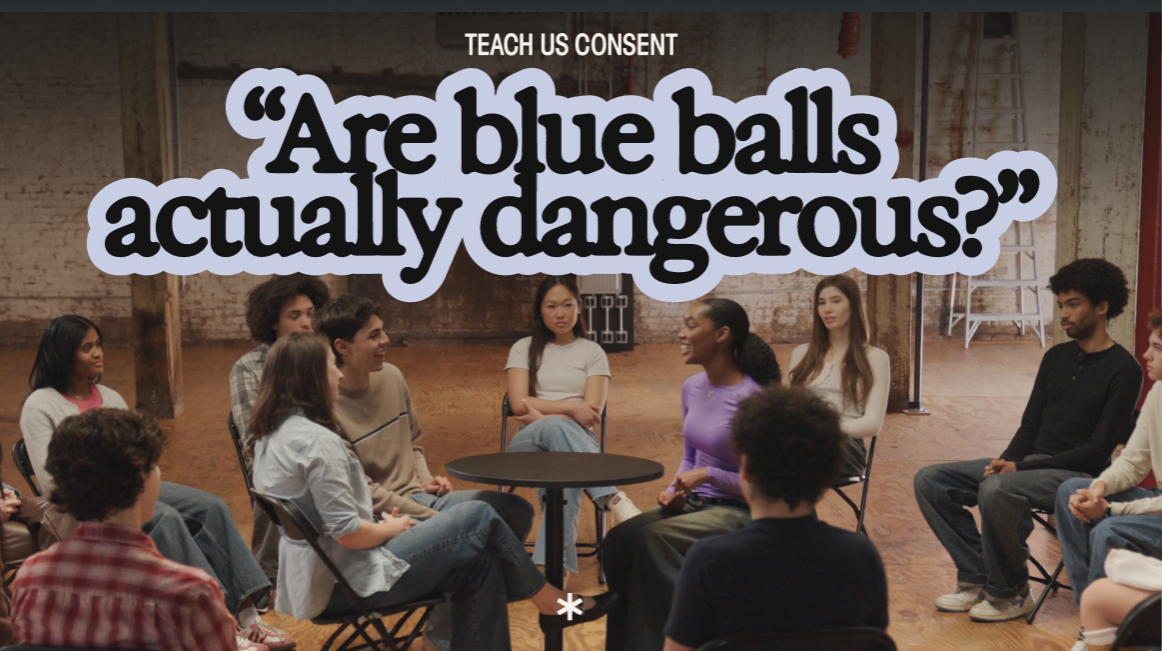
2 Consent Experts vs 13 Teenagers
Teens and experts dive into age gaps, drunk hookups, consent and rejection. We break down how to ask for consent, recognise when someone's pressuring you and take a “no” without it being a big deal. Walk away with more confidence to spot those red flags and build healthy relationships.

Teens Debate Dating, Sex & Relationships
Teens share their opinions on topics like body count, Snapchat Quick Add, drunk hookups, p*rn and how consent shows up in your favorite shows. Nothing's off limits. Listen to different perspectives on sex, dating and relationships and see how your views stack up.
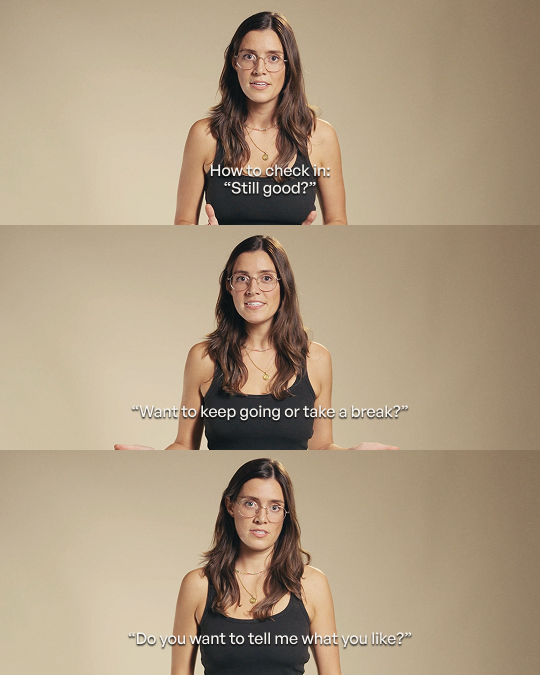
Reels
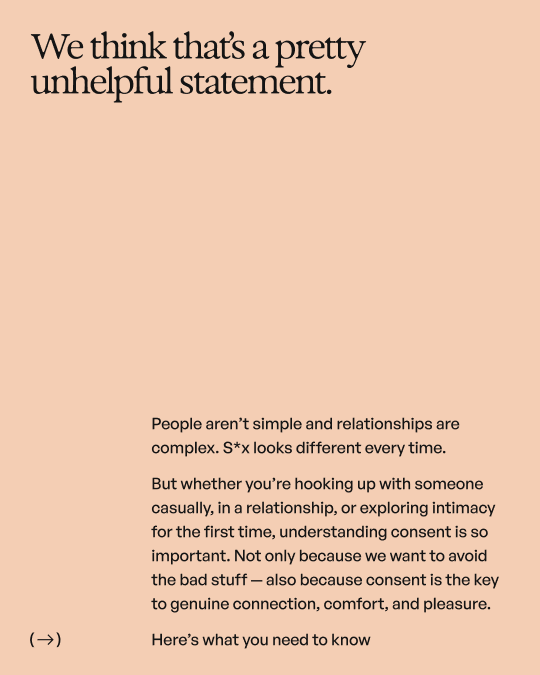
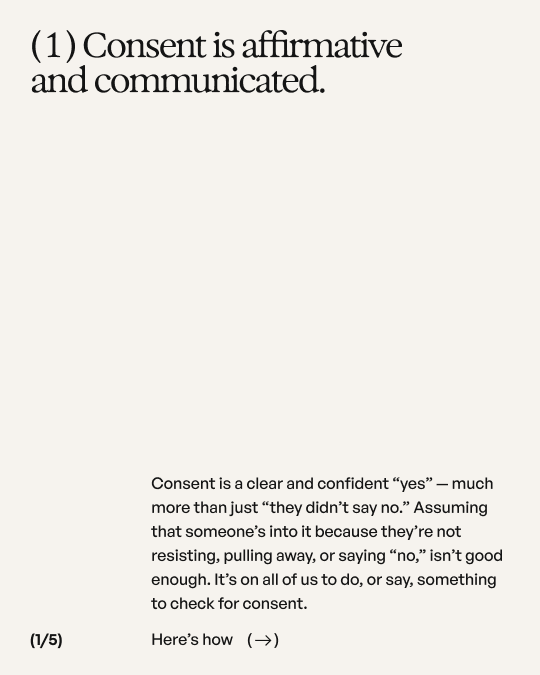
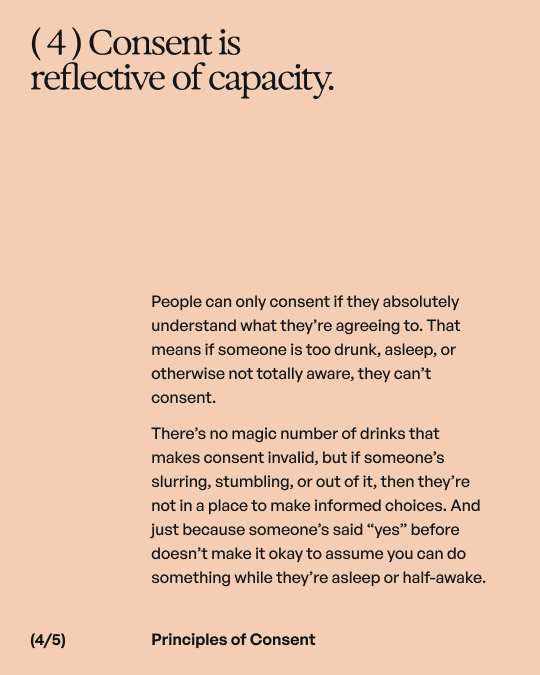
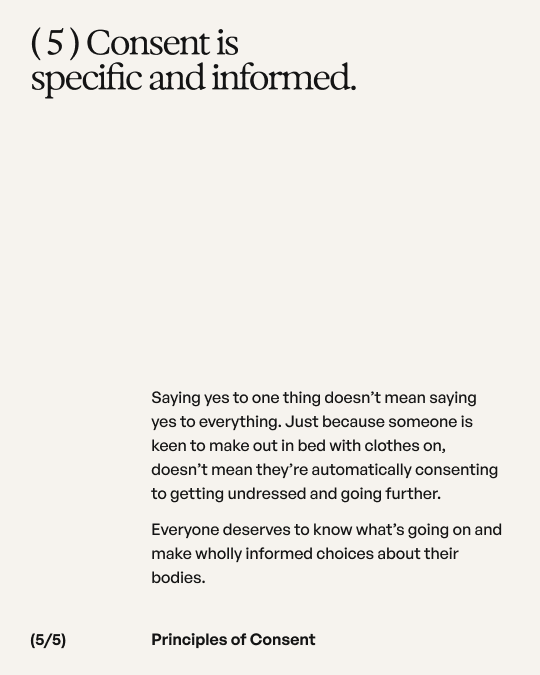
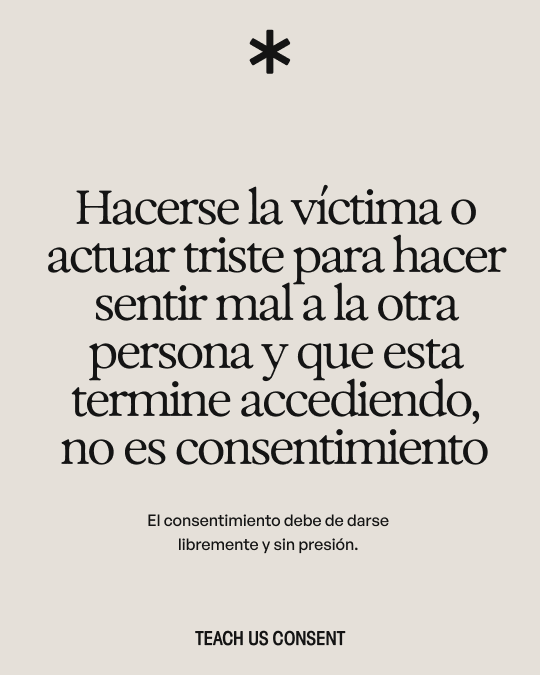
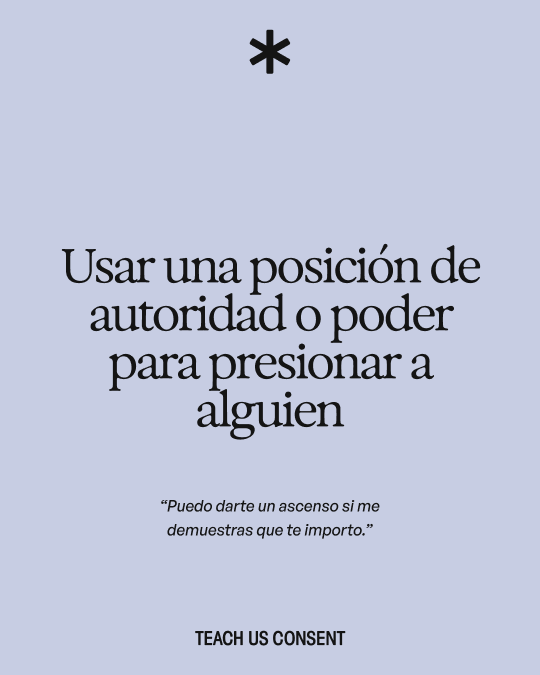
Carousels
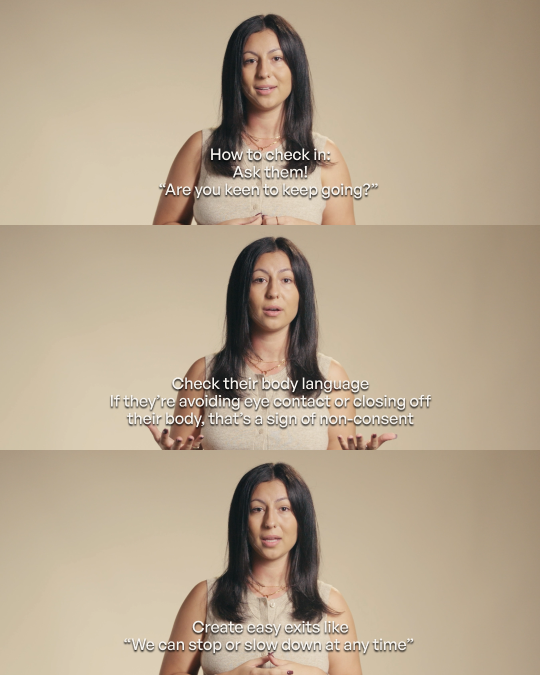
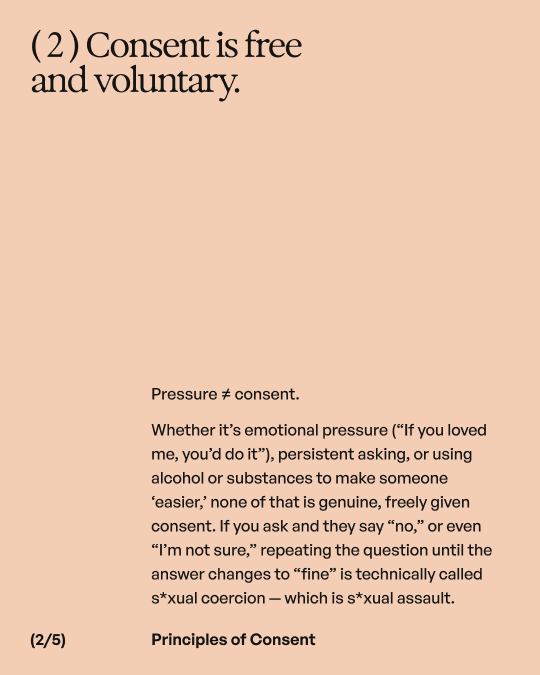
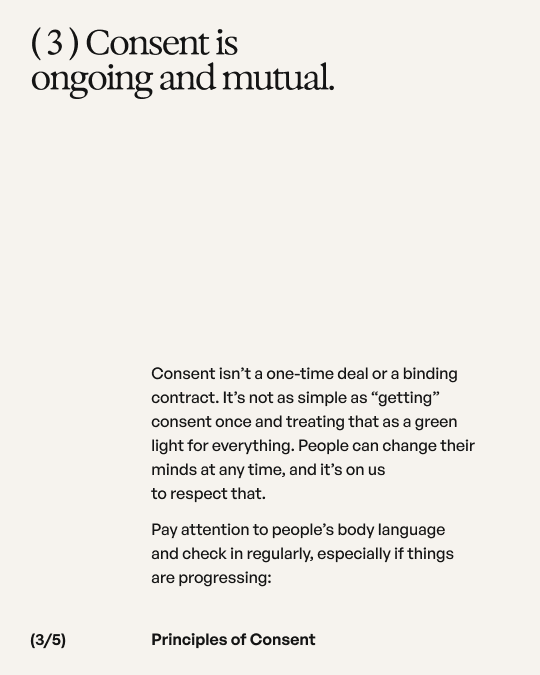


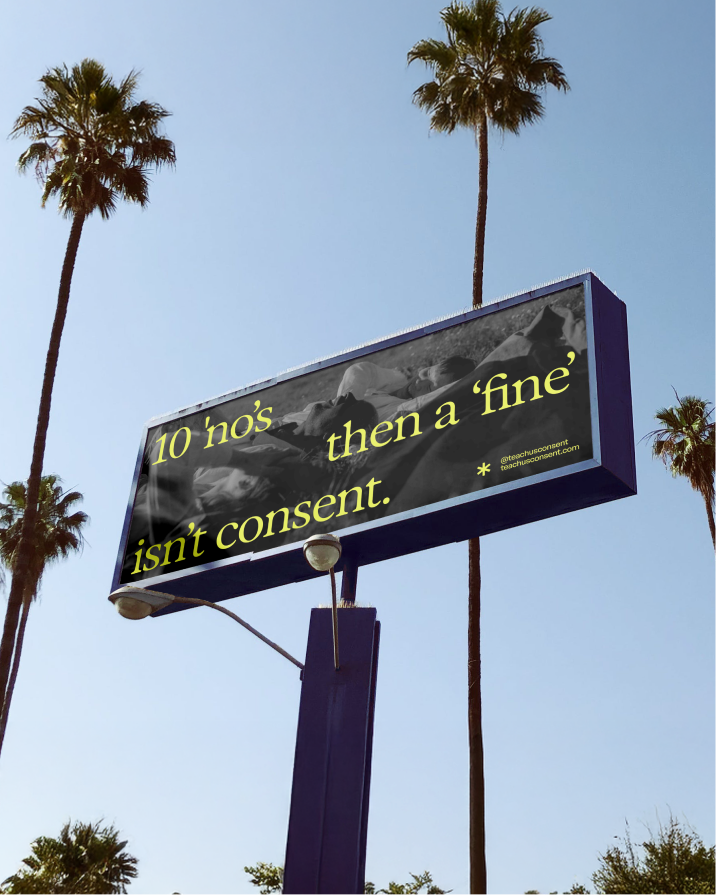
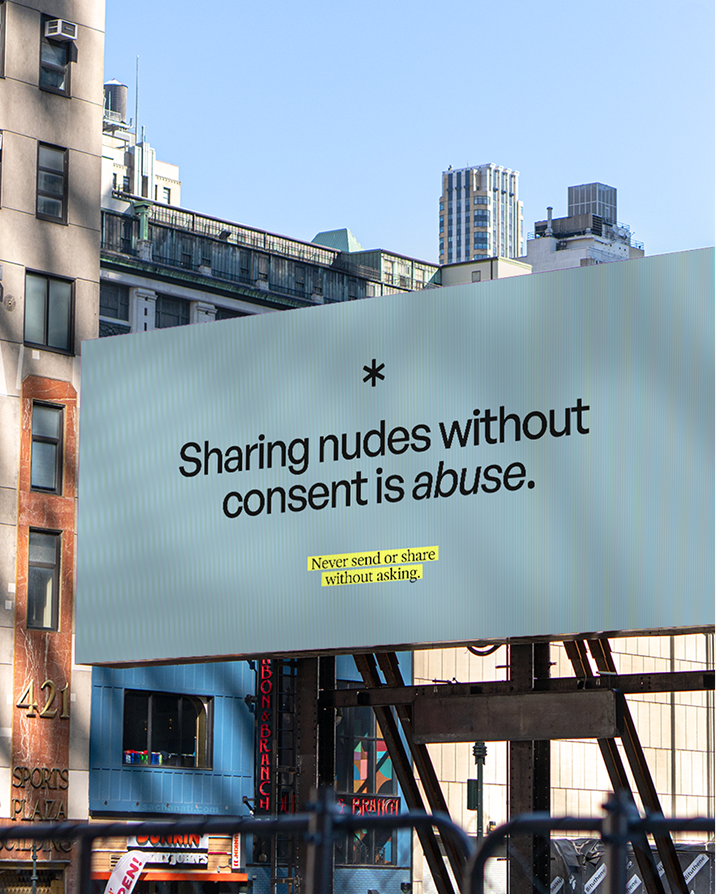


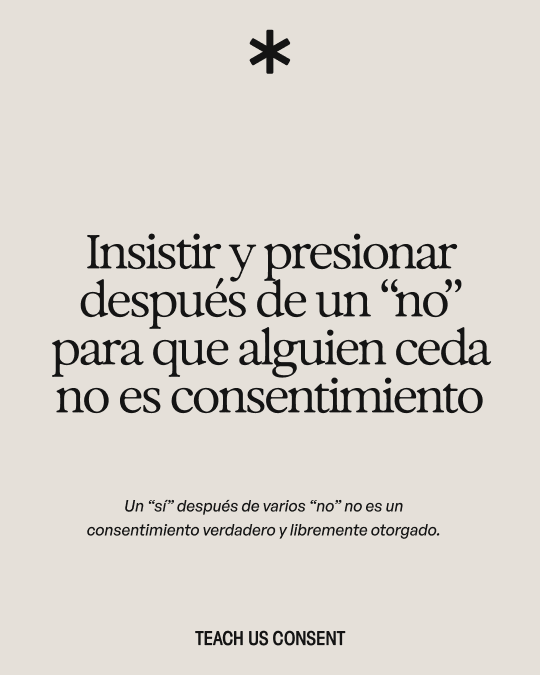
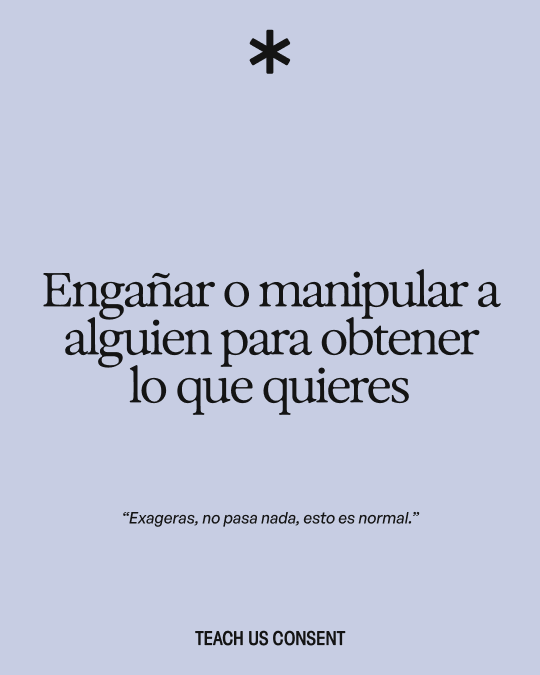




Podcasts
%20Consent%20Is.png)

Teach Us: How Important (& Hot) Consent Is
Practising isn’t as simple as "getting a yes"—it’s about knowing your boundaries, respecting others, and communicating clearly in every type of relationship. This episode unpacks how consent is ongoing, revocable, and actually the key the mutually pleasurable intimacy..

Teach Us: How Gender Expectations Can Cause Harm
What does it even mean to be “a real man” or “a good woman”? In this episode we unpack the gender expectations put on us by society, how it can mess with the ways we relate to each other, and why it might be time to throw out the rulebook.

Teach Us: How To Flirt, Date & Have Sex Respectfully
Dating can feel like a minefield, but it doesn’t have to. In this episode, we bust common sex myths, explore how to flirt without being creepy, and share what safe, respectful dating actually looks like.

Teach Us: How Alcohol Affects Consent
How do we navigate dating, sex and consent when alcohol gets involved? This episode unpacks the pressures, myths and real-life grey areas when it comes to alcohol and the capacity to consent.
.png)
Teach Us: How Porn And Algorithms Influence Us
From porn to TikTok, we break down how online content shapes how we view sex and consent — and why digital literacy is so important.

Teach Us: How Sexual Violence Is Normalized
Sexual violence happens because of the culture we live in. We shape culture, so we can also help stop these harms before they happen. Start here with a shame-free, open conversation about how sexual violence became normalized.
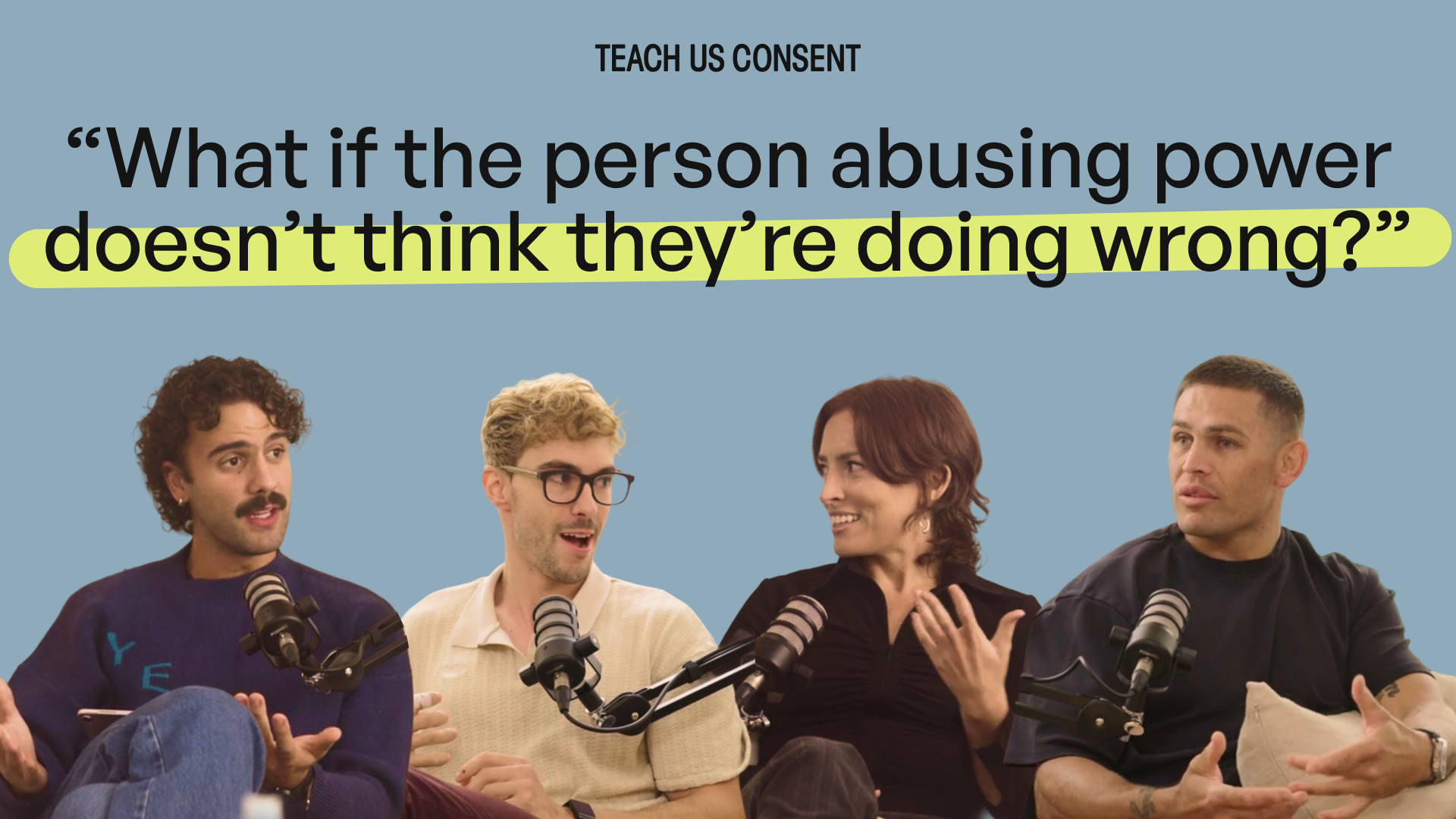
Teach Us: How To Navigate Power Dynamics
In this episode, we explore how power plays out in age gaps, status, money, and positions of trust, and how those dynamics can shape friendships, families, and romantic or sexual relationships.
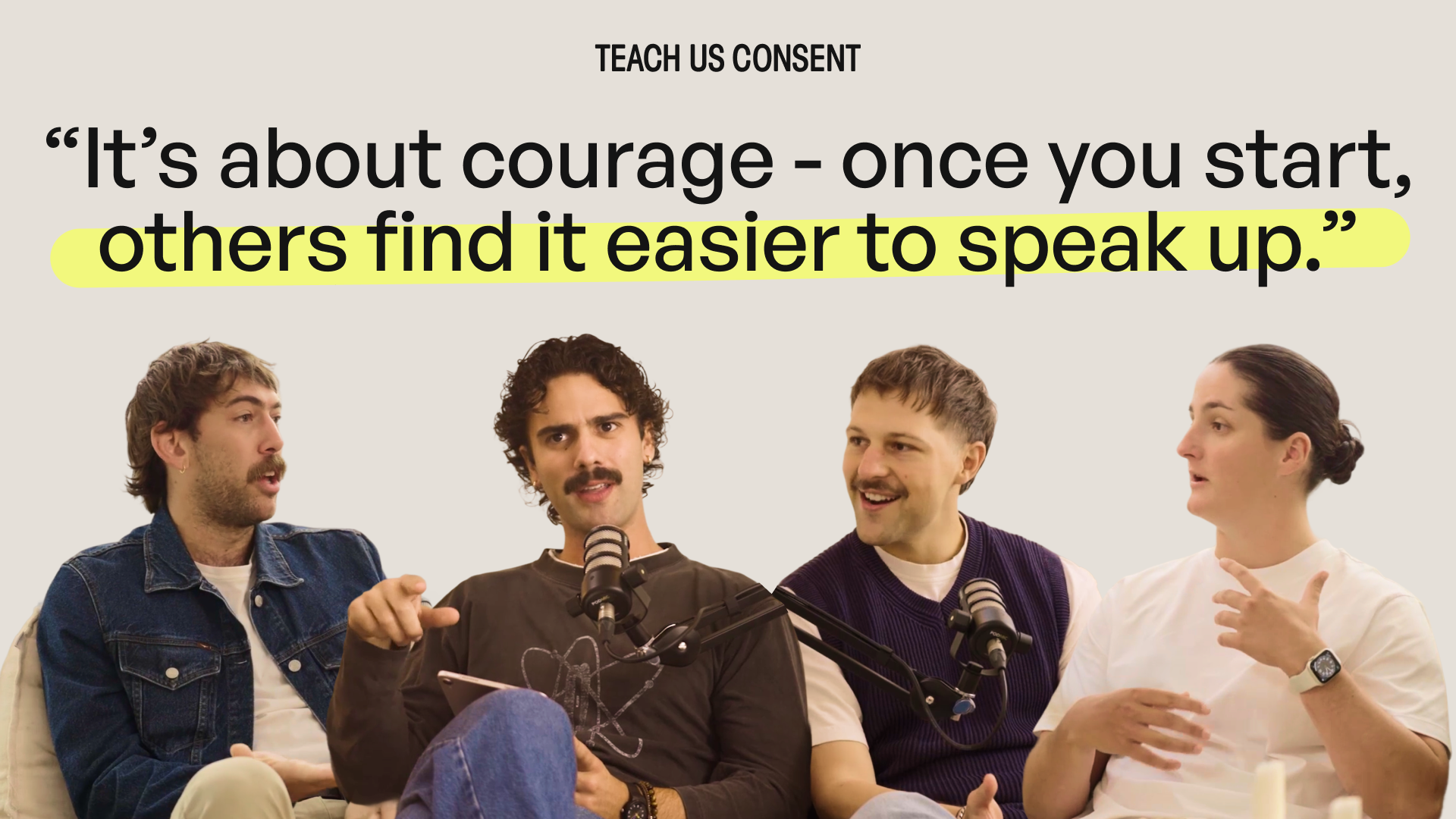
Teach Us: How To Step In & Stop Harm
Whether it’s a friend making unwanted advances at the bar, someone being inappropriate at work, or a stranger pushing boundaries, stepping in as a bystander isn’t always easy. We unpack how to speak up without losing your friends or starting a fight, and how even small actions can make a big difference.
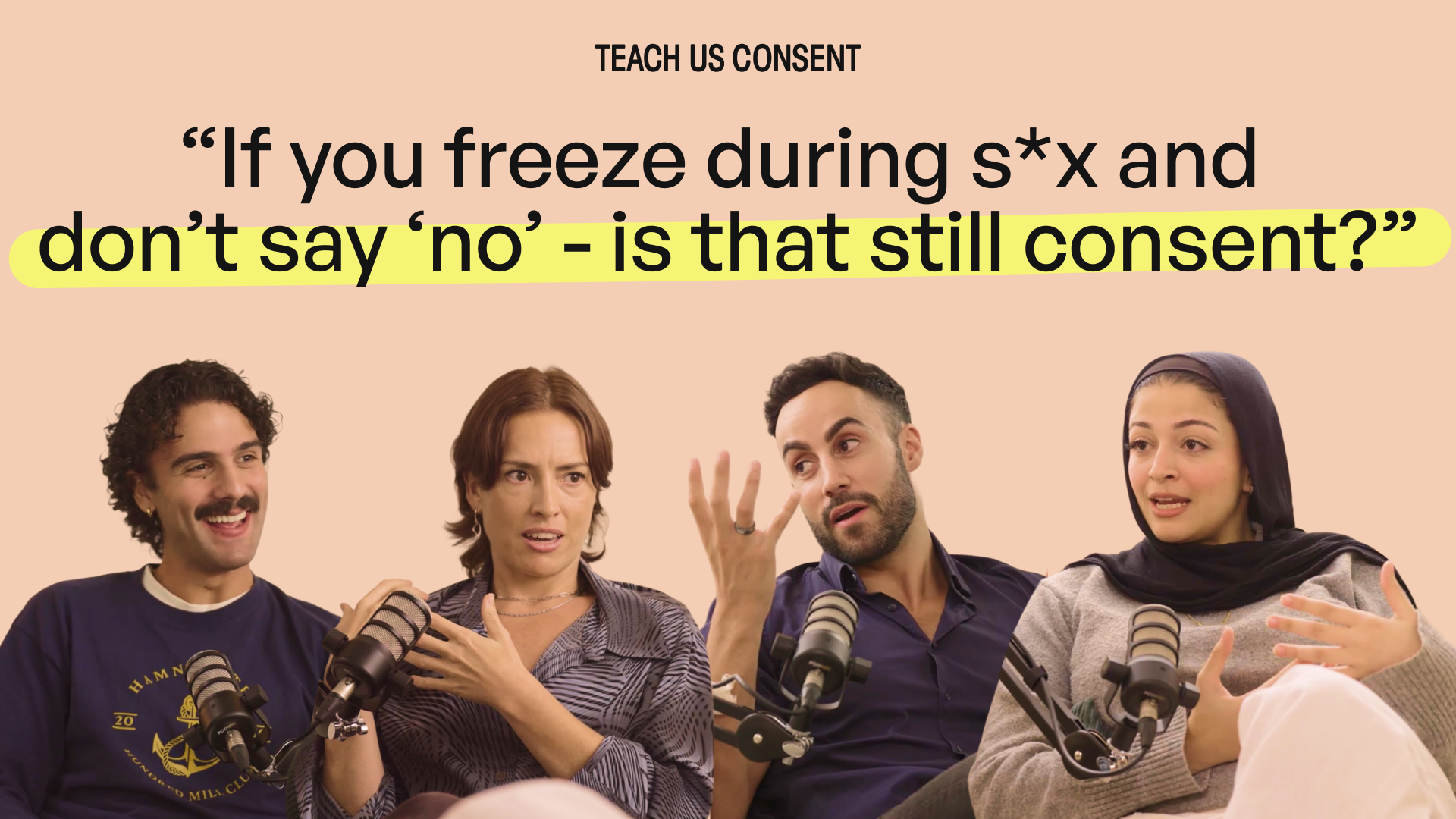
Teach Us: What Flight, Fight, Freeze & Fawn Are
Not all trauma responses look like running or fighting. In this episode, we explore freeze and fawn — two survival responses that are often mistaken for consent.
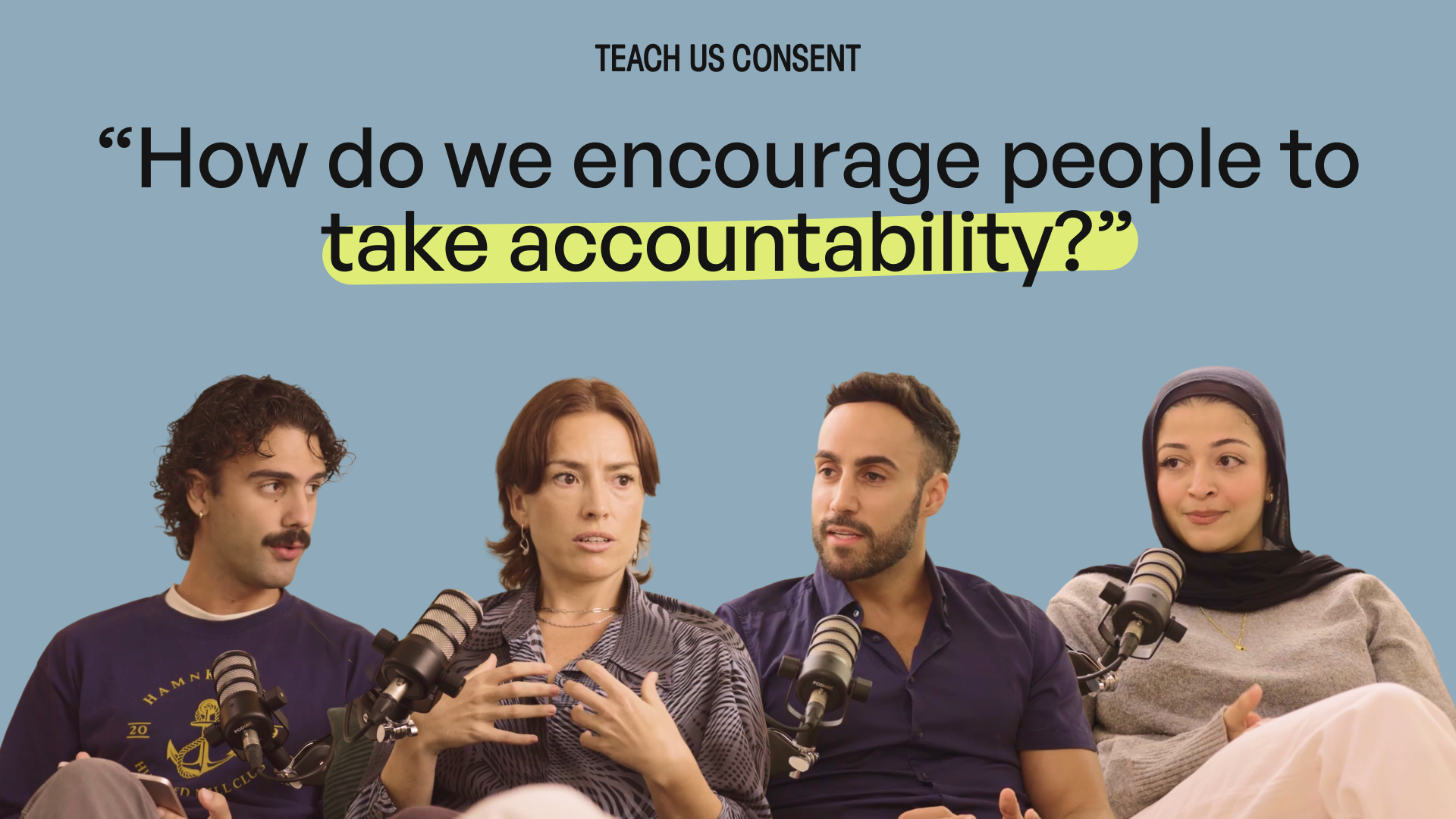
Teach Us: What To Do About Sexual Assault
Sexual and emotional harm isn’t always distant or abstract — it often happens close to home, involving people we know and care about. In this episode, we hear a compassionate conversation about what it looks like when harm happens within our circles.
Teach Us: What Flight, Fight, Freeze & Fawn Are
Not all trauma responses look like running or fighting. In this episode, we explore freeze and fawn — two survival responses that are often mistaken for consent.
Teach Us: What To Do About Sexual Assault
Sexual and emotional harm isn’t always distant or abstract — it often happens close to home, involving people we know and care about. In this episode, we hear a compassionate conversation about what it looks like when harm happens within our circles.
Docos & YouTube Videos
Teach Us: How Gender Expectations Can Limit & Hurt Us
From alpha males to tradwives, gender rules are everywhere — online, in culture, and in how we relate to each other. This doco unpacks how gender expectations shape us, limit us, and in some cases, harm us. We explore where these ideas come from, how they affect relationships and consent, and how we can challenge them for good.

Teach Us: What ‘No’ Looks Like & How to Practice Consent
Consent might not be simple, but that doesn't mean it's hard. It's about treating everyone with respect and empathy, and it's actually the key to better intimacy, connection and relationships.
Teach Us: How ‘Harmless Jokes’ Normalize Harmful Behaviour
Sexual violence doesn’t start with assault—it starts with language, jokes, and attitudes we ignore. This documentary breaks down how “harmless banter” builds a culture where disrespect and violence are easier to excuse. From myths to media, we unpack how normalization works—and what we can do to stop it.

Teach Us: Why Algorithms & Media Warp Our Worldview
What we watch shapes how we think — and algorithms are doing the shaping. This doco breaks down how media and porn can influence our worldviews and the way we relate to each other. Learn how to spot manipulation, build media literacy, and take control of what you consume online.
Articles

Sexual consent: The TLDR
Whether you’re hooking up casually, in a relationship, or experiencing intimacy for the first time, understanding consent is essential. Not only because we want to avoid the bad stuff, but because consent is the key to genuine connection, comfort, and pleasure.
Read Article
TikTok told me to set boundaries... what does that actually mean?
Boundaries are everywhere: self-help and relationship gurus on TikTok are encouraging us to set them, communicate them without fear, respect everyone else’s perfectly, never let anyone cross them, and get angry or remove them from your life when they do — even accidentally. Sounds like a lot of work— so what does it all mean?
Read Article
Let's talk protection (without killing the mood).
From the absolutely pre-eminent Means Girl quote, “don’t have sex or you’ll get pregnant… and die,” to the rising trend in our generation to ditch condoms, it can be hard to work out what’s important, misinformation, scare tactics, or how you’re supposed to talk about this stuff without feeling awkward or judged.
Read Article
Mind the (age) gap: unpicking power dynamics in relationships
Have you ever had a gut feeling that something in your own or a friend’s relationship didn’t sit right? Or a relationship that seemed ‘off’ but you couldn’t quite explain why? That could be your instincts picking up a shift in power dynamics within the relationship
Read Article%20(1).png)
How gender expectations can cause harm
The traits we associate with genders aren't inherently negative. But when society pushes the idea that there's only one "right" way to be a man or a woman, those traits can become limiting, and even harmful.
Read Article%20(1).png)
Cute or controlling? Caring or coercive? Let's talk coercive control
Coercive control can start subtly, which can make it hard to pinpoint what crosses the line. But left unchecked, it can escalate into a relationship where someone feels trapped, powerless, and unable to trust their own instincts.
Read ArticleMind the (age) gap: unpicking power dynamics in relationships
Have you ever had a gut feeling that something in your own or a friend’s relationship didn’t sit right? Or a relationship that seemed ‘off’ but you couldn’t quite explain why? That could be your instincts picking up a shift in power dynamics within the relationship
Read ArticleHow gender expectations can cause harm
The traits we associate with genders aren't inherently negative. But when society pushes the idea that there's only one "right" way to be a man or a woman, those traits can become limiting, and even harmful.
Read ArticleCute or controlling? Caring or coercive? Let's talk coercive control
Coercive control can start subtly, which can make it hard to pinpoint what crosses the line. But left unchecked, it can escalate into a relationship where someone feels trapped, powerless, and unable to trust their own instincts.
Read ArticleSolicited Advice
I've recently decided that I want to have sex, but I'm terrified to. I was raised with the Christian ideals of premarital sex and that a piece of your soul goes with that person. I'm truly scared to have sex, not just because I was raised to fear premarital sex, but that I may not enjoy it due to my upbringing, or that it would hurt.
It’s incredibly brave to name these fears and speak honestly about the tension between your values and your desires. As a 30-year-old who grew up in a Christian household, I’m still unpacking a lot of this too. I still remember sitting on the floor during Sunday School as a shy 11-year-old while the pastor passed around a single, beautiful rose. She told us not to be careful with it. Some kids ripped off petals, others tossed it across the room, a few passed it gently. When the rose returned to her, petal-less and bruised, she held it up and said, “This is what happens when you give yourself away before marriage.”
Whether or not your experience with Christianity looked exactly like that, this story reflects a common message in purity culture: that sex before marriage diminishes your worth. These kinds of metaphors, sometimes taught with good intentions, can leave lasting emotional wounds, and a lot of unanswered questions about sex. The idea that a “piece of your soul” goes with each partner can create deep fear, guilt, and shame, especially when you're starting to make your own choices about sex and relationships.
It’s important to say: these messages are not the entirety of Christianity, and many people of faith find ways to hold onto their spirituality while embracing a more compassionate, empowering view of their sexuality. Still, the legacy of purity culture is real, and it can shape how we see our bodies, our relationships, and even our sense of self. The good news is: unlearning shame is possible and you deserve to have pleasurable sex.
That said, I understand why you feel scared. It’s common to worry that the experience might be painful physically, emotionally, or spiritually, no matter your faith background. Whatever the reason, fear deserves to be met with compassion, not pressure.
To me, the fear you’re experiencing is an indicator that you’re being thoughtful about your decisions, and that’s a good thing. Paying attention to your body, your boundaries, and your values is one of the most important ways to care for yourself and your sexual health. So rather than pushing those feelings aside, give yourself space to sit with them. Start exploring where they come from, and gently ask yourself what you want sex to look and feel like. You are in control of what you do, when you do it, and who you do it with.
Give yourself permission to take things slowly
If and when you decide you're ready to take that next step, there are ways to make the experience feel safer, emotionally and physically. You don’t have to rush into anything, and you definitely don’t have to follow anyone else’s timeline. Taking it slow isn’t just okay, it’s encouraged! Moving at your own pace builds trust with yourself and helps create a foundation for a more comfortable, connected experience.
Explore your own body first
One of the best ways to feel more grounded and confident is by exploring your own body before sharing it with someone else. Masturbation, despite the stigma many of us were raised with, can be a powerful way to learn what feels good, what feels uncomfortable, and what helps you feel safe and connected during sex.
There’s no one “right” way to do it. If you’re just starting out, create a private, relaxed space and use your hands to touch the parts of your body that feel good. External touch, especially around the vulva and clitoris, can be incredibly pleasurable and informative, it’s how many people with vulvas experience orgasm. You deserve to feel pleasure without shame or fear, and those self-love sessions can play a big role in helping you build confidence and trust in your body.
Communicate with your partner
If and when you're with someone else, communication is everything. Talk openly about your boundaries, your fears, your needs, and safer sex practices. You might say something like:
- “I want to take this really slow.”
- “Can we check in with each other as we go?”
- “I want us to use protection. Are you comfortable with condoms?”
A partner who respects you will care about your comfort, your safety, and your emotional well-being, not just the physical experience.
Dealing with pain
A lot of people worry that their first time is going to hurt, and while that’s a possibility, it doesn’t have to. Pain is often caused by tension, lack of arousal, not enough lubrication, or moving too quickly. So preparation is key. To help prevent discomfort, focus on:
- Using plenty of lube (water-based or silicone-based if using condoms)
- Spending lots of time on foreplay
- Creating a relaxed environment
- Listening to your body and checking in with your partner
Your body and mind need time to ease into things. Arousal isn’t just physical, it’s mental and emotional too which is why foreplay is so broad. Foreplay can be anything that helps you feel prepared and turned on. That might mean having a slow, intimate date, engaging in playful or deep conversation, taking a warm bath, wearing something that makes you feel sexy, or simply cuddling, kissing, and touching before going further.
Figure out what gets you in the mood and don’t be afraid to ask for what you need. Check in with your partner before, during, and after sex. This helps build trust and ensures you’re not pushing past your limits. If anything starts to feel painful, say something. You’re allowed to pause. You’re allowed to stop. You never owe anyone a full sexual experience that ends with orgasm.
Aftercare
Just like your body and mind need time to ease into sex, they also need time to ease back out of it. That’s where aftercare comes in. Aftercare is all about caring for yourself and your partner after sex. And it doesn’t have to be complicated. At its core, aftercare is about respect, presence, and checking in with each other. That might look like cuddling, talking about how you’re feeling, journaling, watching a comfort show, taking a warm shower, sharing a snack, going for a walk, or listening to music—whatever helps you feel safe, grounded, and emotionally okay. Aftercare is especially helpful if you’re navigating lingering shame or anxiety. It’s a way to remind yourself: that was fun and I’m okay.
Whether you wait, explore solo, or decide to have sex with a partner, you are allowed to take your time and choose what feels right for you. And no matter what you choose, your worth is never diminished.
"Am I the asshole if I'm not into PDA? My girlfriend always wants to kiss and hug when we're around friends and hold hands when we go anywhere. It just makes me super comfortable, but she's getting upset and taking it personally, thinking I'm embarrassed by her. I really love her and want to be a better boyfriend, what can I do?"
As we get older and move into long-term relationships, many of us eventually encounter the moment when one or both partners realizes: “Wait, we have different desires.” Maybe it shows up as feeling like you’re always the one initiating physical touch out in public, or as more subtle moments where there’s a sense one partner is more often in the mood than the other. Sex education didn’t prepare us for this.
So, how do you talk about it? Is it a sign your relationship is doomed? Let me tell you now that this is a perfectly normal experience, it happens to virtually everyone, and there is, in fact, hope.
I see what you’re experiencing as rooted in the same disconnect between people with mismatched libidos: physical touch is more than just intimacy, it can be a way of reassuring your partner that you care for them and want to feel connected in everyday moments. When one person wants that more often than the other, or in different contexts, it’s easy to feel confused about how to move forward.
In thinking about physical touch, I’ve personally never loved “love languages” as a scientific framework. There are a lot of other theories in relationship psychology that, to me, hold more weight. If you’re ever bored and feel like Googling, attachment theory and John Gottman’s “Four Horses of the Apocalypse" are more thoroughly researched. But love languages is the one that seeped through the cracks into mainstream conversation. By now, most people know the concept: that we feel most loved through one or many of five distinct ways; words of affirmation, acts of service, quality time, receiving gifts, or physical touch. I don’t necessarily think finding someone with the same love language is the end-all-be-all to resolving conflicts or feeling cared for, after all many of us would like all five of those qualities in a partner. I do think, though, that the rise in understanding of love languages helps us put words to some of our needs.
The framework teaches us that intimacy and touch aren’t always about satisfying a purely physical need for pleasure, but can be a type of communication that portrays love and a desire to be emotionally close. Physical touch is clearly important to your girlfriend. Maybe it’s important for you, too, but that need shows up in a different way, privately.
The reason I bring up love languages — and what I do actually like about them — is that they offer accessible language for talking about our needs, which is exactly what you two should continue doing. The fact that you both have already started this conversation is great! Coming to a conclusion requires effectively communicating what PDA signifies to her and why it makes you uncomfortable, so that you can reach understanding and decide how to move forward together.
From what you’ve shared about why your girlfriend finds PDA meaningful, it seems that for her, resistance to PDA feels like rejection. For women especially, who are often socialized into the role of being pursued rather than pursuing in dating, rejection may feel unfamiliar, unexpected, and therefore especially scary. We’re never taught how to cope with this fear of rejection. Healthy ways to process this could include reminding her that your boundary around PDA is not an act of personal rejection, but rather a limit to what you’re willing to do in a relationship. And even if it were, it wouldn’t define her worth as a person. Reminders of her desirability and importance within the relationship could help ground her in a more accurate and affirming perspective.
To answer your question more directly, I would never encourage you to betray your own boundaries to appease someone else. What you’re expressing is certainly a boundary and a healthy one: you’re communicating a need that would make you comfortable in a relationship, without controlling someone else’s behavior. Boundary setting doesn’t have to be framed as “putting a foot down”, rather naming what matters to you so someone else can know and love you as you authentically are. Many people share discomfort with PDA for the same reasons — that they associate physical touch with privacy, so you’re not alone in that.
Whether this becomes detrimental to your relationship depends on both of you, but it sounds like you’re invested in working it out, and I certainly think you can. There are ways to communicate your boundary that maximize understanding while minimizing feelings of rejection or hurt:
- “My boundary around PDA is about my personal comfort, as opposed to how I feel about you”
- “Physical touch is something that I associate with privacy. While we see this differently, it doesn’t mean I’m embarrassed by you.”
- “It’s important to me that my boundary is respected, but it’s just as important that you feel valued and cared for.”
- “Are there things I can say that would reassure you in moments when I don’t want physical touch?”
- Perhaps putting a name to the type of physical contact that makes you uncomfortable vs. those that feel okay, can help you plan for future outings.
- If showing affection feels okay in private moments, maybe you can make an effort to show physical affection in those settings that are more comfortable for you.
I hope if there’s one thing you take away, it’s that this isn’t about choosing between ignoring your needs or shutting your partner down. Try seeing the conversation as just that, a conversation, not a conflict. You’re already tackling the hardest part by starting to talk about it. Continuing down that path, with thoughtfulness about how you communicate is where you’ll find mutual understanding.
"I find it really hard to tell my boyfriend what I like during sex. I want to say stuff like "a little shower" or guide his hand but I sort of just go along with what we usually do. I'm scared by bringing it up, it'll sound like I'm not enjoying it or criticizing him. I'm also a bit worried that if I ask to do new things it'll turn into pressure to do more than I'm comfortable with."
This is so common and so normal, which I want to say off the bat because I want you to know that nearly everyone who now can say what they like and want during sex at one point could have submitted the exact same question and they overcame their fears to do so, so you can too!
I’m a consent educator, intimacy coordinator for TV and film, and an artist. I mention that I’m an artist because what we’re mostly working with here is your creativity, believe it or not. We’re going to be getting into specificity which is a big part of consent, but it’s also a creative muscle, it’s the backbone of your artistic voice, and it’s going to show you who you are in the most beautiful, elegant, organic way. When we talk about asking for what you want, we’re talking about self-expression, and that really is a creative act in any medium, including sex.
I’m going to outline some ways to practice asking for what you want outside of sex, but the TLDR answer to your question is, for better or for worse, you’re going to have to push yourself to just…do it. There’s no real trick here, you have to just say something. Just say, “I like that” or “Try it this way” and demonstrate. It is going to feel weird and unnatural at first, but I can promise you that eventually, with practice, it becomes second nature. You don’t ever graduate from timid to confident simply because you’ve been having sex long enough; you actually have to practice. I think there can be this illusion that some people are good at it and some are not and so if you’re not doing it, then you must be in the second camp. This illusion suggests that some people find it easy and they were probably just born that way, lucky them! And sad, unfortunate you and only you find it challenging and so you need specialized attention and help learning how to do this thing. Not true! You can and you will learn. But there’s no way to skip the part where you push yourself through a little discomfort. And why do you push yourself through a little discomfort? Because we are learning, together, how to communicate. You will fumble and you will try again. But you have to throw a little spaghetti at the wall to see what works and what doesn’t, what feels authentic coming out of your mouth and what doesn’t. You need to try in order to collect data, and right now you have little to zero data.
Practice. Practice, practice, practice. No opportunity is too small. You like how your partner cooked your eggs this morning? Try, “I love how you cooked these eggs.” Be more specific. “I love the texture of these eggs. They’re so fluffy. I like how they’re gooey but not runny, and yet not dry at all.” Watch them light up. You like their outfit today? Try, “Your outfit is so cute. I love that pattern combo.” Add some flare. “Those jeans hugs your butt so perfectly” and give it a squeeze. Ooh lala! Practice giving constructive feedback. Trust that your intention shines through in your tone, in your face, in your eyes because you are you and only you! Your particular delivery, in your unique voice tells your partner about who you are, about what you notice, about what you want, and about how you see them. You’re not being critical, you’re giving a compliment. Saying “I love how you cooked these eggs” likely does not make your partner wonder if that means you’ve never liked any of the other eggs they’ve made for you. Instead it means they’ll probably bookmark the way they made them today so they can make them for you again in the future. See what I’m getting at?
You can also make suggestions. “Have you ever tried adding shallots to your eggs?” “Can I show you how I learned to make scrambled eggs?” “Here’s my favorite tool for folding an omelet.” No one’s being criticized, no one is panicking about what this means about all the eggs they’ve ever made up until now. We’re collaborating, we’re learning, we’re experimenting. What’s more, you’re sharing about yourself.
It feels important to point out that making requests (something for you, like, “I want to try ____”) can feel way more vulnerable than making offers (something for them, like, “Do you want me to _____?”) But let’s switch roles. Imagine your partner said, “I just found out about this position we haven’t done, do you want to try it?” If it sounded interesting, if you were curious, you’d probably go wide-eyed and say, “Yeah!” If it sounded uncomfortable or ouchie or bad to you, your face might scrunch up, you might shake your head and say, “Mmmmmm, I don’t know about that one.” And then what would happen? You’d move on and probably have perfectly good sex, as usual. Do you think your partner can handle that? I bet the answer is yes.
Consent and especially sexual consent have been boiled down to mean permission, a binary yes or no. But the origins of the word consent reveal what we’re really doing: con means “with” and sent means “feel.” We feel, together. We ask not, “Am I doing this right” and, “Am I doing a good job?” but rather, “Do we like this?” and, “How does this feel to us?” The second set of questions gets at something much more creative, and gives you a much more informative answer.
So how do you speak up? I’m afraid you already know the answer. You’re going to learn to speak up by speaking up. It feels weird now because you’ve never done it. It’s unfamiliar. It’s the same with your fear that making suggestions or requests might lead to situations where you feel pressured to do more than you’re comfortable with. But imagine yourself a few years down the line, with years of practice speaking up. Imagine how it would feel to say, “A little slower,” or, “Stay there,” or “Actually let’s stop,” or, “Nevermind, I don’t like that!” not for the first time, not for the third time, but for the hundredth time. There’s a version of you not so far away who is already a pro at this. The gap between you and them consists not of some catalyzing event or series of events that makes you suddenly “ready,” but rather of trial and error. As far as feedback and direction go, the worst case scenario is you give it a shot, it comes out sounding clunky and weird, you say to your partner, “That came out so much more awkward than it sounded in my head,” and you both get to laugh about it before trying again.
As for finding yourself in situations where you’re maybe in over your head, or not quite ready, or just realize you actually don’t want to do something but you already started, there are two most likely scenarios that I can envision (given that it seems clear you’re in a loving relationship with a caring partner). In one, you say something along the lines of, “Actually I don’t want to do this anymore” and your partner is so relieved you told them and they stop. In the second one, you transmutate what feels like pressure into something like curiosity. Sometimes I find myself feeling pressure from the outside and I realize that as a result, I haven’t even asked myself how I’m feeling in the moment. When I do, I think, “I’d like to see how this feels, or how it changes over time” until I find my limit and put a stop to it.
When done carefully and with a lot of awareness, this kind of exploration can help us learn what we like and don’t like, for future reference. Sometimes you have to hit, or even cross a limit or boundary to know where it is (I could write a whole piece on this kind of communication, with self and others, but in short, move slowly, remember you’re always allowed to change your mind, and even mistakes can provide incredibly useful information about you and your body. It can be helpful to say these things out loud before you begin: “I want to move slowly and I might change my mind mid-way through”). I promise you your partner wants you to tell them what makes you feel good. Most people just want to know they’re doing a good job and guidance and direction can actually help your partner feel more confident in their ability to make you feel good. Give them that gift!
"I've been consciously trying to practice consent, but every time I do I feel like I'm being kinda awkward? I've talked about it with my friends and they say that explicitly discussing consent right before sex is super cringe. I'd just really like some tips around how to make it natural and casual."
First of all, thank you for being so real about this. I get what you're saying, and to be honest, I’ve felt this same tension and awkwardness in my own sexual encounters — overthinking every move, wanting to be respectful and sexy, but instead ending up in my head.
A lot of people want sex and consent to flow naturally, but human intimacy is far more complex. It’s emotional. It’s layered. It’s full of uncertainty. And yeah, sometimes it’s awkward.
I think part of that awkwardness comes from how consent has been framed as this non-negotiable necessity — which it absolutely is — but we’re often taught to think about it in a really black-and-white way: “No means no” and “Yes means yes.” While those are important foundations, they can give the impression that consent is a one-time verbal checkpoint. Like there’s a script: ask a question, get a response, proceed.
On top of that, many of us have grown up believing that “good sex” is supposed to be effortless and spontaneous, like in the movies where no one talks and everything just magically works. But in real life, people are full of contradictions. You can want something and still feel really nervous. You can be turned on and still need reassurance. You can be in the middle of things and suddenly realize that you’ve changed your mind. Real sex isn’t always smooth sailing. It’s full of weird sounds, uncomfortable pauses, miscommunications, and little moments of “wait, what’s happening?” Consent isn’t separate from that — it’s part of it, and full of nuance.
I don’t always know what I want when it comes to sex, and I have to figure it out as I go. There’s a lot of vulnerability in that, and that’s okay. A big part of practicing consent is being able to show up as your whole, present self in each moment (even if that self is unsure or anxious). It also means making space for your partner to do the same.
When two (or more) people are navigating their own boundaries, desires, and emotions all at once, of course it’s going to feel a little messy. But that doesn’t mean you’re doing sex or consent wrong.
One thing that helped shift my perspective was seeing consent less as a contract or a one-time permission slip, and more as a practice — something active, ongoing, imperfect, and deeply human. It’s a skill you build and grow over time — not just with your partner(s), but with yourself.
It’s not about checking a box — it’s about being present, curious, and communicative, even if that communication is a little weird at first.
So with all of this in mind, here’s the definition of consent I’ve landed on:
Consent is a practice that involves navigating your own desires, body, and boundaries, as well as navigating your partner’s — and communicating to figure out what feels good together.
The more we think of consent as a practice or a mindset, the less pressure there is to say the “right” thing. You don’t have to sit down on the edge of the bed and have a full debrief of your sexual history, boundaries, and preferences before anything happens — although you totally can if that feels good for you! Practicing consent doesn’t always look like a formal conversation. Sometimes it’s about entering the moment with the understanding that you and your partner bring different wants, needs, and boundaries to the table (or bed), and are open to discovering them together.
When that kind of mutual care and respect is the baseline, you can stay connected and communicate as you go. For example, if you're kissing and decide to put your hand on their thigh, you can ask, “Do you like it when I touch you like that?” or “Is this okay?” or “What do you want right now?” These check-ins can be playful, curious, and sexy. And now consent is part of the experience — not an interruption to it.
This is also where nonverbal communication becomes powerful. Our bodies communicate too. Eye contact, leaning in, guiding someone’s hand, pulling your partner closer, moaning, relaxing into touch — these are all ways we can express a yes without words. Just as importantly, there are cues that communicate a no, like freezing, pulling away, tensing up, or going silent.
Paying attention to someone’s body language isn’t the same as assuming or guessing what someone wants based on how their body responds. That can lead to misunderstanding, especially when you factor in arousal non-concordance (when the body responds physically — like getting wet or hard — even if the mind isn’t on board). Instead, it’s about noticing the ways people express comfort, discomfort, pleasure, and desire. Does your partner seem present? Are they moving toward you or pulling away? Are they initiating or engaging in touch? These things don’t replace asking or checking in, but they do add to the fuller picture. Consent lives in that energy exchange.
It’s funny because I used to think I was “doing” consent wrong.
I thought if we didn’t pause for a formal yes/no conversation, I must be missing something. But when I think back, it’s not like we were skipping anything — we just didn’t realize we were already in a feedback loop. We were tuned into each other, reading the energy, asking things mid-moment, adjusting based on how it felt. That’s consent!
Still, mistakes can happen. Boundaries can get crossed, even when intentions are good. This is a huge missing piece in most consent education. A big part of practicing consent is being able to recognize when you’ve misread a signal or made a misstep, take accountability, and commit to doing better. It also means respecting if your partner sets a boundary in response to that. That’s the nuance I’m talking about. And I want to give a lot of credit here to consent educator Sarah Casper (@comprehensiveconsent), whose work helped shape how I now think and talk about consent.
Here are a few things that might help consent feel less awkward:
- Reframe it: Consent isn’t a checkbox — it’s an ongoing conversation and a shared experience.
- Stay present: Tune into your partner’s responses — not just their words, but their energy, body language, and tone.
- Explore your own desires: Get to know what you like through solo pleasure so you can share it with more confidence and clarity.
- Name the awkwardness: It’s totally okay to say, “Hey, I know this might sound a little awkward, but I want to make sure you’re feeling good.”
- Check in afterwards: Talk about what felt good and what could be different next time.
- Give yourself grace: You’re learning. Consent is a skill, not a performance.
I love that you’re having these conversations with your friends. That means you’re already on the right path and probably practicing consent in more ways than you even realize. You’ve got this!
"I've just heard the guy my friend is seeing be called a "rapist" by someone that knows him (detailing a specific incident that happened to a friend of theirs). I don't know what to do, and I don't know how I would manage it if I was my friend. How do I prioritize the victim's ownership of their story, making sure my friend is also safe? Do you end things without verification? Should forgiveness be possible?"
Thank you for asking such a thoughtful question with care and consideration, not only for your friend, but the survivor's stories and self-preservation, too.
This situation certainly warrants care and isn't a cut-and-dry answer. Your submission starts from a place of curiosity and honesty, in addition to admitting that you "don't know" how you'd navigate this if you were them. I want to focus on that statement and ask you to pause there. I think, based on your question, we're getting a revelation from your gut/intuition. You know something is off here. You're listening softly, and it sounds like you want to take action, but it also sounds like you feel you need to tread lightly.
I would invite you to lean back into that feeling of intuition and ask yourself, where do you get the most stuck on what to do? When you say you "don't know" what you'd do if you were them, what feelings arise? This is not only a way to help you process what you've heard, but also help you get clarity on how you feel about the situation and the many emotions involved. A feelings wheel may also be a helpful tool for you to further dissect your emotions.
From your submission, it's unclear how you came across this information (i.e., a night out, social media, etc.), but I also hear a fine line between wanting to preserve and validate the survivors' stories while also finding a way to find and communicate the truth. So let's parse out what comes next.
First, I hear you wanting to validate these stories, and I think we should honor them.
That value system lives within you. Trust it. Once you've taken time to reflect and get more clarity about your own feelings, it's time to consider how to approach your friend. This conversation deserves intentionality, not a casual mention between topics, but dedicated time and space where you both can process and have room to breathe.
You may feel pressure to have this conversation in person, and if you do, safety matters. This is a fragile situation that could elicit rage, disbelief, sadness, or a shutdown. Your friend deserves a space where she can feel all of this without being exposed or ambushed.
Consider a private setting, like your house, her apartment, or a quiet park. Somewhere she won't feel publicly exposed. Let her know ahead of time that you need to talk about something sensitive. Frame it honestly: "I'm not sure how to broach this, but I feel compelled to share something with you." While it may create some anxiety, it gives her mental space to prepare rather than being blindsided.
When you're ready to have the conversation, lead with compassion but be direct: "I heard something that's been weighing on me, and I care about you too much not to share it. Someone who knows [his name] told me about a specific incident where he sexually assaulted their friend. This is the second time I've heard something like this about [his name]. I need you to know because I want you to be safe and have all the information to make your own decisions. I take these statements seriously, and I would want to know if I were you."
There may be awkwardness or a long pause. Lean into it. This conversation requires space. Be prepared for the wide array of emotions. Your friend may immediately deny it, react in anger, question you, shut down, or say she needs time to process and can't talk further. All of these are normal and valid. Your job isn't to convince her of anything; it's to deliver the information you believe she deserves to know and hold space for whatever comes next.
On Verification and Belief
You asked whether you should "end things without verification," and I want to address this head-on because it's at the heart of your question. The answer is that this isn't your relationship to end, and verification is more complicated than you might think in these cases.
First, understand that in personal relationships, we're not operating in a court of law. You don't need "proof beyond a reasonable doubt" to take information seriously or to be concerned for your friend's safety. When someone shares that they or someone they know was assaulted (especially with specific details) that deserves to be believed and taken seriously.
Second, what would verification even look like here? A police report? A conviction? The vast majority of sexual assaults are never reported, and even fewer result in prosecution.
Yes, you're hearing this secondhand, which adds complexity. But you now know that two separate people in two separate situations this year have identified a man your friend is dating as having committed sexual assault. That's a pattern. That's information. Your body already told you it’s something you personally can’t ignore.
Your responsibility isn't to investigate or determine guilt. It's to share what you've heard so your friend can make informed decisions about her own safety. She gets to decide what she does with that information, including whether she believes it, whether she stays, whether she investigates further herself.
On Forgiveness and Accountability
You also asked whether forgiveness should be possible. Let's be clear about whose forgiveness we're talking about.
The survivors get to decide whether they forgive their assailant. That's their story, their healing journey, their choice. No one else gets to make that determination or pressure them toward forgiveness as some kind of moral ideal.
Your friend is in a different position. She wasn't the one harmed (that we know of), so it's not her forgiveness to grant. What she can decide is whether she wants to be in a relationship with someone who has harmed others, whether she believes accountability has happened, and what her own boundaries and values tell her to do. It’s also not your friend’s job to rehabilitate someone who has caused harm.
The harder truth is that patterns of sexual violence tend to continue. This person has been named by two different people in two different contexts this year alone. Your friend deserves to know that staying with someone like this means accepting significant risk to her own safety, even if she has evidence to the contrary.
Supporting Your Friend Through Her Process
After you've shared what you know, your friend gets to make her own choices, even if you disagree with them. She might stay with him. She might need time to process before deciding. She might end things immediately. She might even need space from you for a while. Whatever she chooses, your job is to remain a safe, non-judgmental person in her life.
That doesn't mean you can't have boundaries. You can say, "I support you, and I'm here for you, and I trust your decision.” If you need to create distance to stay aligned with your morals, you could add, “I also can't be around him or pretend everything is fine if you choose to stay with him." You can express concern while respecting her autonomy.
If it feels right, keep checking in. Not with judgment, but with curiosity about how she's feeling and whether she feels safe. Watch for signs of escalation or harm. Make sure she knows you're there whenever she needs you, whether that's tomorrow or six months from now when she's ready to leave.
Resources and Safety Planning
Encourage your friend to trust her gut. If something feels off, it probably is. If she's noticing controlling behavior, boundary violations, or anything that makes her uncomfortable, those are warning signs worth paying attention to. Have resources ready for local sexual assault advocacy organizations and domestic violence resources if things escalate. You don't need to push these on her immediately, but knowing they exist and being able to offer them when she's ready can be invaluable, and give you a sense of purpose and action.
Trust Yourself
You started this submission by saying you didn't know what to do. But I think you do know. You asked how to prioritize the survivors' stories while keeping your friend safe, and the answer is that you do both by telling her the truth. You honor the survivors by believing their experiences and taking it seriously enough to act on it. You honor your friend by trusting her with information she deserves to have about someone she's intimate with.
Thank you for caring enough about both your friend and these survivors to ask this question. That care is exactly what will guide you through this conversation.
"A close friend of mine (mid-20s) has been in an on-and-off relationship with a man (mid-50s) she met while living overseas. She spent all her time with him, and was isolated from her support systems, but when she moved home she cut contact and we thought it was over. Recently they reconnected, and now he wants her to move back overseas to be with him. What worries me is that when they’re apart, she talks a lot about wanting children and a future family, but when they’re together she suddenly says she doesn’t want that anymore. I’ve raised my concerns, as have her parents, and I don't know whether to accept it, leave it, or how to be the best support for her."
Thank you for showing a level of care that all of us would be lucky to have in our friendships.
You finished your question with "I want to be a support for her" but it's clear you are already on that journey. It's understandable that you're asking questions. She is an adult, but thirty years is a very large age gap, situating your friend and her boyfriend in very different stages of their life, emotional maturity and experience of relationships. Friendship means looking out for your friend in any relationship and this one is no different.
I'm going to start by holding your hand and saying something tricky: your friend's relationship is hers and she is going to make her own decisions. That is the ultimate truth. However, that doesn't mean you can't do exactly what you've said: be a support. The question becomes "what kind of support?" Given the concerns you've outlined in your question: the secrecy in the beginning, him leading her on, her becoming isolated from her support systems, her parents' concern and her flip-flopping her wants for the future depending on who she's with, thinking about exactly what kind of support feels especially important here.
In our culture, age-gap relationships are common, especially in heterosexual relationships where the woman is younger than the man. This normalizes them and makes it challenging for us to critically analyze without feeling like we are being judgmental. We should practice this regardless, as it helps us all develop critical thinking skills about power and what is healthy to look for in our relationships because, remember, things can feel good even if they're not healthy.
I want to jump to the main question you asked: should you be worried about power dynamics?
Great question, let's explore it. Power is at play in every single relationship we have in varying ways: romantic, familial, friendships, at work, etc. People hold different levels of power depending on their gender, age, race, ability, the role they play, the amount of money they have, their social status, and more. The power we hold is influenced by the society we're in, the identity we have, how our life is structured, our view of ourselves and the values we hold, to name a few. Recognizing what types of power we hold, the impact of it on others, and how we use it is everything.
Age is an obvious power dynamic playing out in your friend's situation. Her boyfriend is thirty-ish years older so it's safe to assume he'll have developed a level of life experience over the three decades he lived as an adult before meeting her. Maybe he is independent in how he lives: his habits and routines may be more set, his foundations like location and family may already be established and immovable. Maybe he's accrued professional experience and developed himself in different careers or jobs. Maybe he's held positions of power at work. All of these can feed into a sense of self, confidence, and competence that looks different from hers, given she hasn't yet had those three decades of experience.
Gender is also a factor here as men hold more power advantage than women in society. They are socialized into seeing themselves – and being seen – as the dominant partners in a heterosexual relationship; the provider, decision maker, leader, and protector. An age gap can also exacerbate this and certain gendered dynamics can become expected.
Finally, though there weren't details about this in your question, given this man is in his mid-50s, we can assume he has a level of financial independence and accrued finances that she doesn't yet. Not only did he grow up in an entirely different economy but he has had three decades more to accrue money and assets. We live under capitalism where everything is dependent on money, so with that in mind, he may have access to a level of power via his money that she doesn't have. I also want to note here that right now "princess treatment" and leaning into traditional gender roles such as relying on a man's finances are being served as empowering trends on TikTok. Regardless of how good it might feel, relying on someone else's finances in a relationship has material consequences. It can lead to feelings of obligation, create or exacerbate power dynamics, or encourage an inability to exit a relationship (especially if someone is cut off from support systems). I note this because current discourse could be shaping your friend's perception of these types of financial power dynamics.
These are all things to consider and then observe in the way your friend speaks about her relationship with him. My advice would be to gently ask questions over time that allow you, and her, to question whether these dynamics are playing into their relationship or not.
The more I read over your question, and focus on the details within it, the more I wonder whether you asking if you should be concerned or not could, in itself, be a sign that there is something to be concerned about.
The tricky part here though is that if she is entering into, or already in, a relationship with unequal power dynamics and the abuse of them (which is sometimes hard for those to identify from the inside, let alone from the outside!), trying to make her "see sense" or control the outcome is likely to actually push her further into the relationship, especially if you've already noticed her become isolated from her friends and family once. We don't want this for any woman in a fairly new relationship, but definitely not if we're already concerned and she might be moving away!
In your letter you gave yourself two options: "accept" or "leave it." But I think you have a secret third option: become the friend she'll need whether she stays or goes. Become a witness. My instinct is that the best thing you can do for her is to keep communication vulnerable and open so that whatever happens you're more likely to know about it and be able to support.
Now, this is easier said than done. It requires patience, compassion, and you finding places to process your feelings about the situation away from her. It's one of the trickier forms of support because we end up having to be a little strategic with our honest feelings. It's probably going to look like saying "how are things going with [name]? How are you feeling about the future?" when all you want to say is "I am concerned and don't think this is right!" You will have to take care of yourself to stay regulated enough to show up for her like this too, so have a think about how you might need support during the process: journaling? Maybe a close friend to debrief with?
If you can keep in good contact with her – wherever she is – and develop an ongoing non-judgmental space for her feelings, experiences, and any observations of her relationship, she's going to be more likely to be able to identify issues when and if they arise. Creating a container where she wants to talk through decisions but with the considered lens of someone who knows her well and wants what's best for her is the kind of support that will help her make the healthiest decisions for herself, and ultimately that's what we want, right? You know her best. Think about what might work best and what might allow her to open up to you more.
Sometimes friendship looks like thinking ahead and doing what's best for our loved one, even if it's trickier for us. But that's part of loving someone; being there even when it frustrates you.
Good luck and take care of yourself in the process, too.
Translated Articles
We’ve translated key resources into Arabic, Filipino, Torres Strait Islander Creole, Chinese Simplified, Vietnamese, Hindi and Auslan. Read & share them below.
Printables

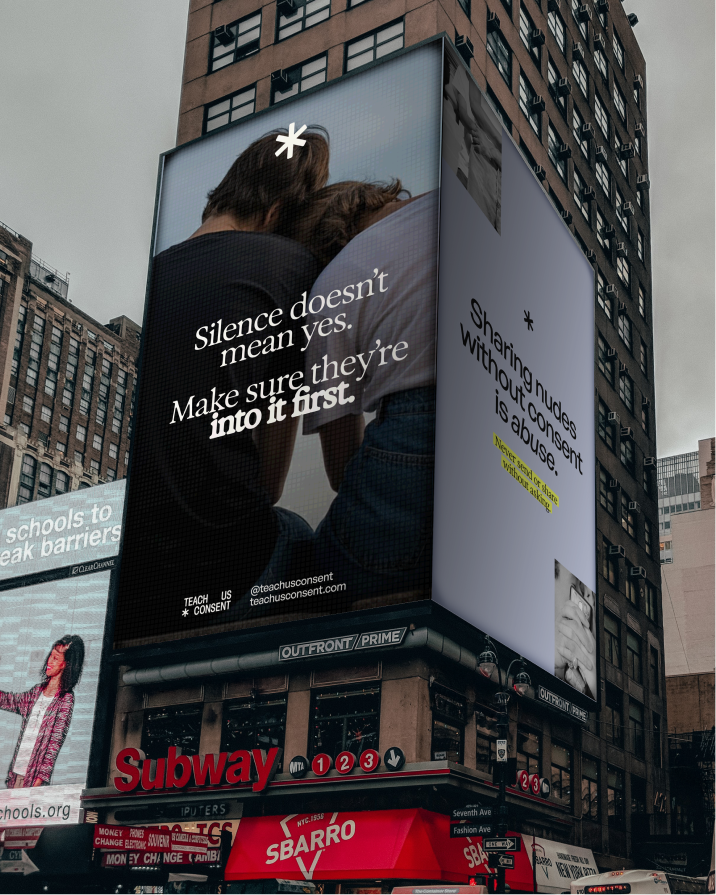
Download our A3 posters and help put approachable, clear consent messaging in the places they matter most - bars, clubs, schools, colleges, workplaces, wherever!
Includes
- 8 x different designs
- PDF format to print any size you like
- Easy to print at home

This zine is our antidote to the endless algorithmic noise around relationships and sex online. A concise collection of expert-written resources to help parents, caregivers, and the young people in your lives navigate relationships with confidence and care.
Easy Read Resources
We've developed Easy Read versions of some resources, co-designed with young people with disability and Embrace Access.
Consent with Others
This book supports young people with disability of all genders and sexualities, offering practical tools and scripts to help them practice consent in their daily lives. It is downloadable as an A4 PDF.
Consent Principles
This book is designed for young people with disability to understand the key principles of consent. It is downloadable as an A4 PDF.
Boundary Setting
This book is designed to equip young people with disability with practical tools to set, enforce, and respect boundaries in their everyday lives. It is downloadable as an A4 PDF.

First Nations-led resources on consent, gender and respectful relationships.
Supported by the Australian Government Department of Social Services

